
Coliving vs PG (Paying Guest): India Market Comparison

Recommended Tools
Free interactive tools related to this article.
The Indian Shared Living Market
India has the world's largest shared housing market. The traditional Paying Guest (PG) model, informal room rentals in residential properties, has been the dominant form of shared living for decades. Professional coliving brands like Stanza Living, Zolo, and CoHo are now disrupting this market by applying technology, branding, and community management to the shared living model.
PG vs Coliving: Key Differences
Scale & Operations
PG: Typically 5-30 beds per property. Managed by property owner or local caretaker. Minimal technology. Informal agreements. Cash-based payments.
Coliving: 50-500+ beds per property. Professional management with app-based operations. Digital payments, community events, maintenance SLAs, and branded experience.
Pricing
PG: ₹5,000-15,000/month ($60-180) in metro cities. Basic furnishing, shared bathrooms, and meals sometimes included.
Coliving: ₹10,000-30,000/month ($120-360) in metros. Fully furnished, high-speed WiFi, cleaning, community events, and app-based services included.
Free Newsletter
Join 36,000+ coliving professionals
Weekly insights on operations, marketing, and growth, delivered to your inbox.
Subscribe Free →Market Opportunity
India's PG market is estimated at $15-20 billion annually. Professional coliving has captured less than 5% of this market, presenting a massive conversion opportunity. The growth is driven by: urbanization (500M+ urban population by 2030), rising incomes and quality expectations, technology adoption among millennials, and investor interest in the asset class.
Frequently Asked Questions
Is there regulatory clarity for coliving in India?
Regulations are evolving. Several states (Karnataka, Maharashtra) have introduced or are developing coliving-specific licensing. Check our India regulations guide for current requirements.
What NOI margins do Indian coliving operators achieve?
Top operators report 25-35% NOI margins at scale, benefiting from lower labor costs and higher occupancy density than European or American markets. See our benchmarks dashboard for regional comparisons.
Written by
Admin
Admin is a contributor at Everything Coliving, the leading growth platform for coliving operators worldwide. Everything Coliving has been featured in 50+ publications including Forbes, BBC, and Financial Express.
Explore Related Topics
Further Reading
Related Articles
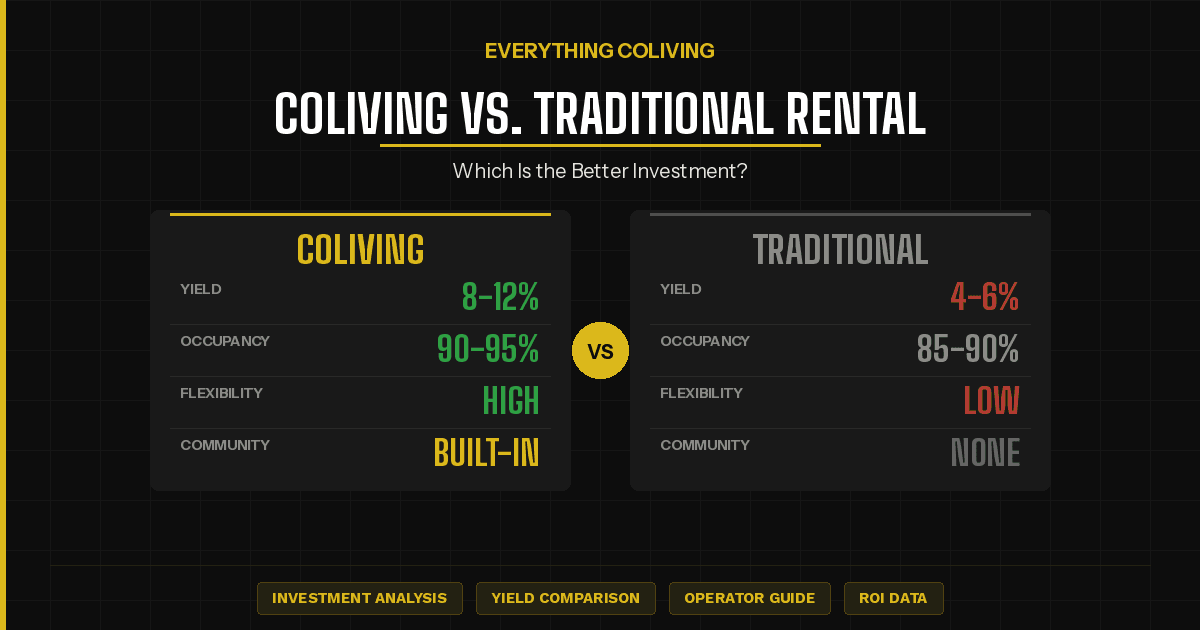
Coliving vs. Traditional Rental: Which Is the Better Investment?
Compare the financial returns, risks, and operational demands of coliving investments against traditional buy-to-let properties.

Coliving in Asia-Pacific: Market Overview and Opportunities
Asia-Pacific is the fastest-growing coliving market globally. Explore key markets, consumer trends, and investment opportunities across the region.

Coliving vs Build to Rent (BTR): Which Model Delivers Better Returns?
A detailed comparison of coliving and build-to-rent investment models. Yields, operational complexity, resident demographics, and market outlook analyzed side by side.